
If you are in Sydney, you also have the extra fun of smaller lots, tight access, councils, neighbours close enough to hear everything, and soil that can be sandy in one suburb and heavy clay in another.
So let’s talk about backyard stump grinding. Not in a vague way. In a practical, Sydney homeowner way. What it is, what it costs, what can go wrong, and when you should absolutely not DIY it. To learn more about the stump grinding process, site access considerations, and the benefits of professional removal after tree cutting, homeowners can explore expert guidance from qualified arborists who handle a wide range of residential tree care projects across Sydney.
What backyard stump grinding actually is (and what it is not)
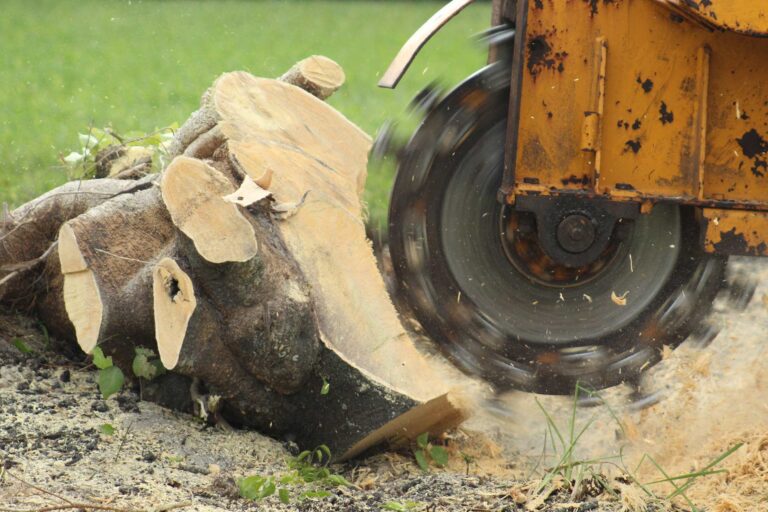
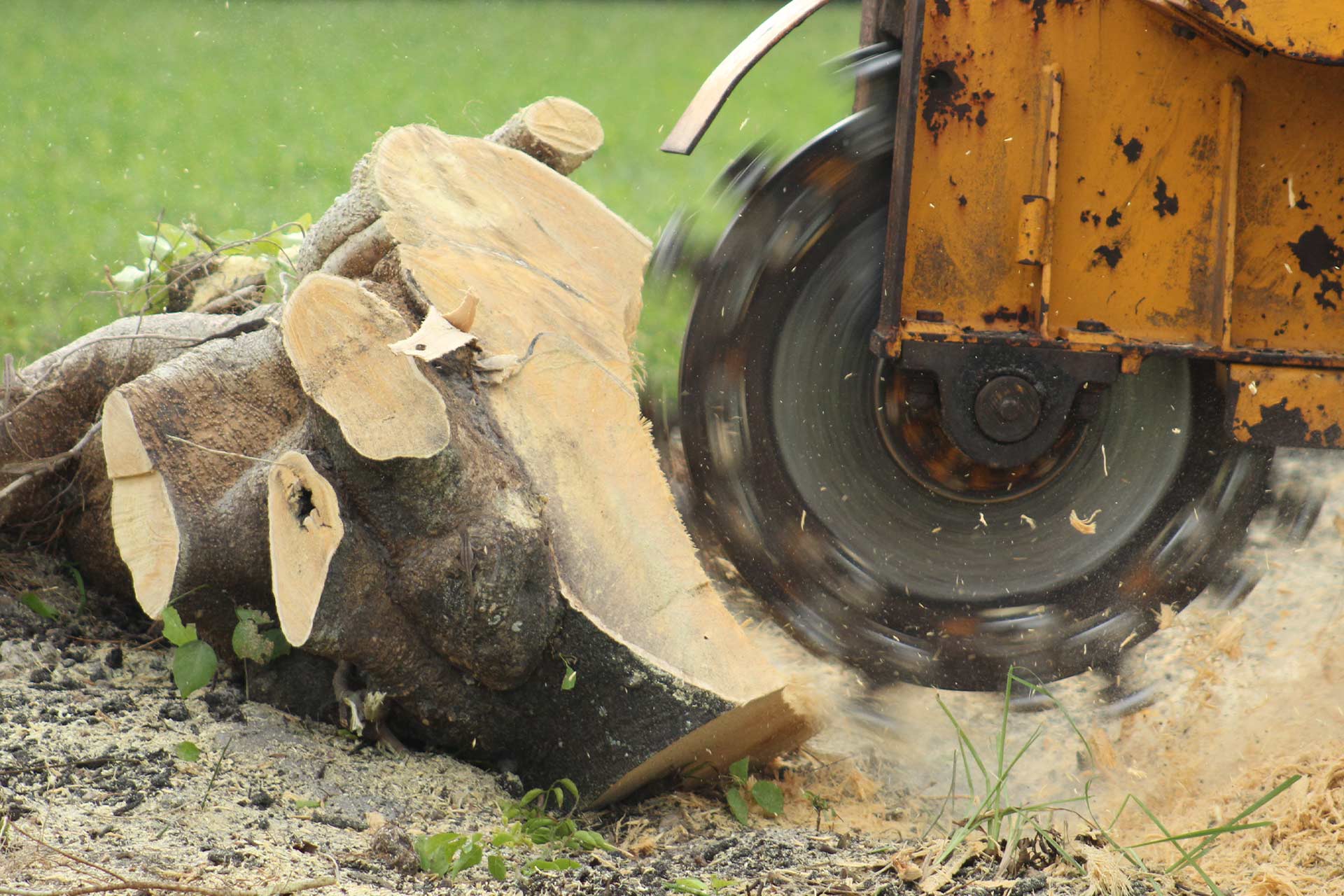
Backyard stump grinding is the process of using a stump grinder machine to shred a tree stump down into wood chips, usually to a depth below the soil surface so you can re turf, re plant, or just stop tripping over it.
It is not stump removal in the full excavate and haul the roots out sense. Grinding typically takes the stump down and leaves the larger root system in the ground to naturally decay over time.
In most Sydney backyards, grinding is the go to choice because:
- It is faster than digging it out.
- It is less disruptive to lawns and paving.
- It works in tight access areas where an excavator is not happening.
- It avoids the mess of ripping up half the yard.
Why Sydney homeowners usually choose grinding over digging
A lot of Sydney homes have something that makes stump removal annoying:
- Side access that is basically a hallway.
- Pavers, retaining walls, or garden edging right beside the stump.
- Services nearby, like stormwater lines or irrigation.
- Neighbours and fences close enough that you cannot just go wild.
Backyard stump grinding is more controlled. The machine is doing the work in one spot. You are not trying to lever out roots and accidentally crack your garden bed edging, or pull up a chunk of old pipe you forgot existed.
Also, if you are planning to sell, a stump can make the backyard look unfinished. Grinding is one of those small jobs that makes the whole space feel “done”.
Before you grind anything, check these Sydney specific things
1) Council rules and tree permits
Grinding a stump is not the same as removing a tree, but if the tree was removed without approval, councils can get weird about it. In some areas, protected trees and heritage considerations still matter. If this stump came from a recent removal, it is worth confirming the original removal was compliant.
If it is an old stump that has been sitting there for years, most people just deal with it. Still, if you are unsure, a quick call to your local council can save you stress.
2) Underground services
This is the big one. Sydney properties often have:
- Old clay sewer lines
- Stormwater runs
- Gas lines
- NBN conduits
- Irrigation and garden lighting
Before backyard stump grinding, you want to have a reasonable idea of what is under and around the stump. If you have any doubts, get a professional who is used to working around services, or at least locate lines where possible.
3) Access width
Some grinders are narrow enough for standard gates. Others are not. Measure your side access and gate openings before you book anything or hire a machine.
Also, think about steps. A couple of steps up or down can turn a simple job into a nightmare if you are DIYing. Learn more about Tree removal and protection – NSW Planning Portal.
DIY backyard stump grinding vs hiring a pro in Sydney
You can absolutely hire a stump grinder from a tool hire place and do it yourself. People do. Some even enjoy it, in a slightly unhinged weekend project kind of way.
But here is the honest comparison.
DIY can make sense if
- The stump is small, not a massive hardwood base.
- Access is easy, flat, and wide.
- You are comfortable with loud machinery and safety gear.
- You do not mind cleaning up a lot of chips and dust.
- You are not near pipes, pavers, or retaining walls you care about.
Hiring a pro is usually smarter if
- The stump is large, old, or from a dense hardwood.
- It is close to fences, walls, or other structures.
- There are multiple stumps.
- You want it done cleanly, quickly, and without guessing.
- You do not want to spend half a day wrestling a machine you have never used.
A professional backyard stump grinding job is usually done in an hour or two, sometimes less. DIY can turn into the whole weekend, plus a sore back, plus another Bunnings run.
What equipment is used for backyard stump grinding
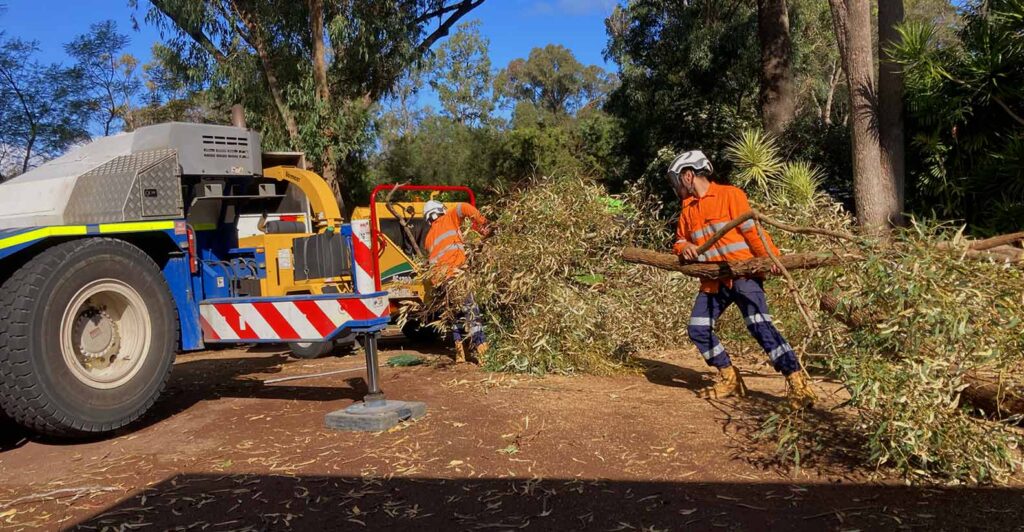
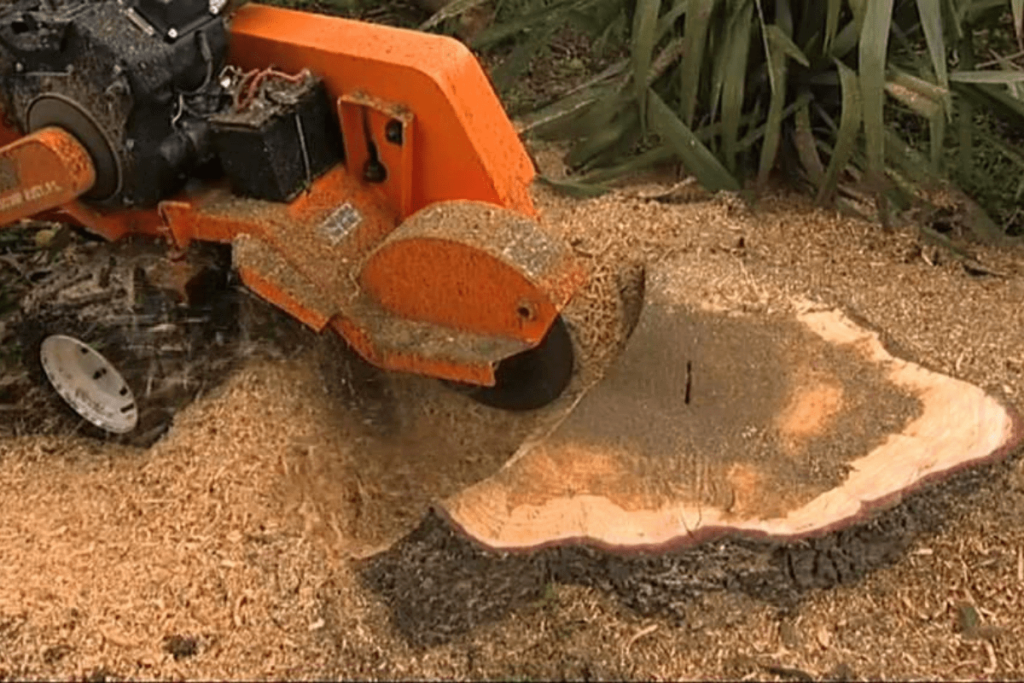
A stump grinder is basically a spinning cutting wheel with teeth that chips away at the stump. Different setups exist:
- Handlebar walk behind grinders: common for hire, decent for small to medium stumps.
- Self propelled grinders: easier to control and manoeuvre.
- Tracked grinders: better for slopes and soft ground, often used by pros.
- Tow behind grinders: usually for larger jobs with access.
In Sydney backyards, walk behind or narrow tracked machines are common because access is everything.
Step by step: how backyard stump grinding is done (the real world version)
If you are hiring a professional, this is roughly what they will do. If you are DIYing, this is the process you are trying to replicate without smashing anything.
Step 1: Clear the area
Remove rocks, garden edging pieces, kids toys, anything that can become a projectile. Grinding throws chips hard and fast. It is not the time to leave a brick nearby.
Step 2: Cut the stump as low as possible
If you can chainsaw it down closer to ground level first, grinding is faster and cheaper. Pros often do this as part of the job.
Step 3: Set up a safe zone
Keep pets and kids inside. Tell neighbours if you are close to a shared fence. Use eye and ear protection. Grinding is loud. It also kicks up dust and chips.
Step 4: Start grinding side to side
You swing the cutting wheel across the stump surface, shaving it down in layers. The machine slowly works deeper.
Step 5: Grind below soil level
Most people aim for 100 to 200 mm below ground so you can cover it with soil and turf. If you plan to re plant a tree in the same spot, you may need deeper grinding, but honestly, re planting in the exact same spot can be tricky anyway.
Step 6: Backfill and tidy
You will have a pile of mulch like chips mixed with soil. Some people reuse it as mulch elsewhere. Some remove it and replace with clean topsoil, especially if they want turf to grow properly.
This is the part many people underestimate. Backyard stump grinding is not just the grinding. It is the cleanup and finish that makes it look like the stump was never there.
What to do with the wood chips after grinding
You have options:
- Use as mulch in garden beds, but do not pile it too thick against plants.
- Compost it slowly, mixed with green waste, because stump chips are carbon heavy.
- Remove it if you want to lay turf. Turf over pure chips tends to sink as it decomposes.
- Mix and topsoil: a common approach is to remove some chips, mix a bit into soil, then top with quality soil and turf.
If you are aiming for a clean lawn finish, treat the grind spot like a mini landscaping job, not just a hole to fill.
How deep should you grind in a Sydney backyard
This depends on what you want the space to become.
- Just want it gone and safe: 100 mm below ground is often fine.
- New turf: 150 to 200 mm is better, plus remove a decent amount of chips and add topsoil.
- New garden bed: similar depth, chips can stay as long as you are planting shrubs and topping with compost.
- Hardscape, like pavers: you may want deeper grind and proper base prep, because settling is the enemy.
In other words, backyard stump grinding is not one depth fits all. The finish matters.
See Also : When Should You Hire a Consulting Arborist in Sydney for Your Property?
Common mistakes homeowners make
Grinding without checking for rocks and debris
Old garden beds can hide bricks, concrete chunks, and random metal. Grinder teeth do not love that. Your wallet does not love replacing teeth either.
Leaving chips in the hole then turfing over it
It looks fine for a month. Then it sinks. Then you have a dip that collects water.
Going too close to a fence
Grinding near fences is possible, but it takes control. One slip and you can pepper the fence with chips or nick a post. Pros are usually much cleaner around boundaries.
Assuming roots are gone
Grinding removes the stump. Roots remain and will decay. Sometimes you get fungal growth or a soft patch later. This is normal, but it surprises people.
Costs in Sydney: what backyard stump grinding usually runs you
Pricing varies a lot because stump size, access, number of stumps, and species all matter.
As a rough Sydney guide:
- Small stump (easy access): often a few hundred dollars.
- Medium to large stump: can climb depending on hardness and time.
- Multiple stumps: many services price per stump with discounts for several.
- Difficult access: can add cost because smaller machines take longer.
If you are getting quotes for backyard stump grinding, send photos and include:
- Stump diameter at widest point
- Height above ground
- Access width
- Whether there are stairs
- Nearby structures and surfaces
You will get more accurate pricing and fewer surprises on the day.
Safety stuff people skip (please do not)
Stump grinders are not casual tools. They are powerful machines with spinning teeth. If you are DIYing backyard stump grinding, take this seriously.
Minimum basics:
- Eye protection and face shield
- Hearing protection
- Gloves
- Long pants and sturdy boots
- Keep everyone away from the work zone
- Do not grind when the ground is slippery or unstable
- Do not rush near buried obstacles
If any part of this makes you think “yeah nah”, hiring someone is a perfectly good decision.
Aftercare: what happens to the spot over the next few months
Even after backyard stump grinding, you can get settling as the remaining roots decay and the soil compacts. To manage that:
- Add topsoil if the area dips.
- Avoid planting a new tree in the exact same spot immediately.
- For turf, keep an eye on low spots after heavy rain.
- If you see mushrooms, it is usually just wood decomposing, not a crisis.
Sydney weather swings from heavy rain to dry spells. That cycle can speed up settling. A quick top up of soil later is normal.
When stump grinding is not the best option
Sometimes grinding is not the right call.
- If you need to build foundations or a retaining wall right there and you cannot risk settling.
- If the stump is wrapped around key services and grinding could damage them.
- If the stump is in a spot where machines cannot access and you cannot safely manoeuvre a grinder.
In those cases, full removal or a different landscaping plan might make more sense.
Quick checklist before you book backyard stump grinding
- Measure access points and gates
- Confirm what you want to do after, turf, garden, paving
- Clear the area around the stump
- Consider underground services
- Ask how deep the grind will go
- Ask what happens with the chips
- Get a clear quote in writing
It is a small list, but it prevents most of the annoying stuff.
Final thoughts
A stump is one of those backyard problems that quietly nags at you. It is never urgent, until it suddenly is. And in Sydney, where outdoor space is precious, clearing it properly makes a bigger difference than you would think.
If you want the cleanest, lowest drama result, backyard stump grinding done with a proper plan for cleanup and backfill is the move. Do it once, finish it properly, and you get your yard back.